Images made with AutoDock CrankPep (ADCP). Click an image to enlarge it.
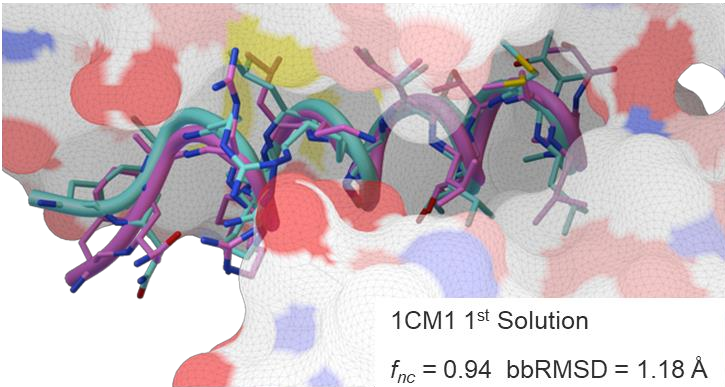
A helical peptide docked by ADCP (cyan) closely overlays the crystal structure (magenta) on the receptor surface. Source: ADCP preprint (Zhang & Sanner, 2019), Fig. 4.
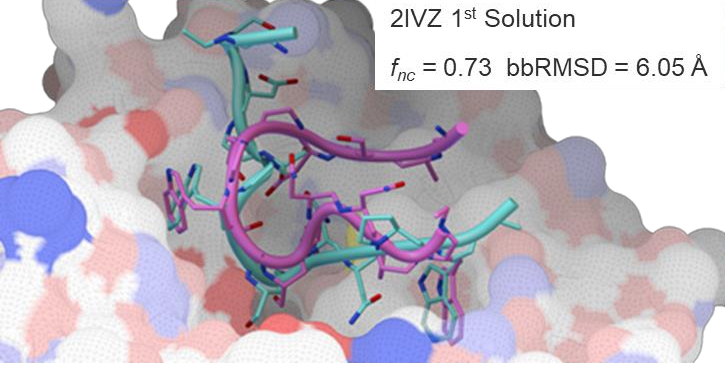
ADCP’s top-ranked pose for a 16-residue peptide (cyan) compared with the experimental structure (magenta) in its receptor pocket. Source: ADCP preprint (Zhang & Sanner, 2019), Fig. 4.
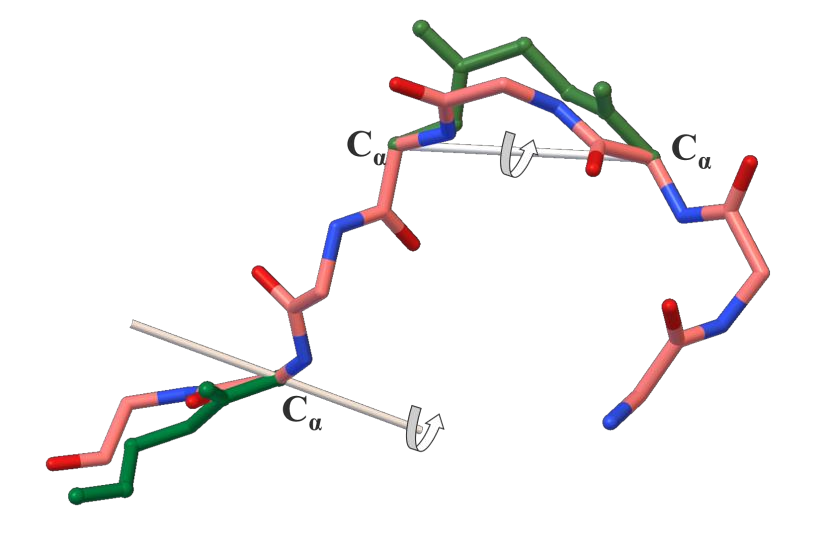
CRANKITE Monte Carlo moves used by ADCP: a crankshaft rotation about two C-alpha atoms and a rotation near the chain end. Source: ADCP preprint (Zhang & Sanner, 2019), Fig. 1.
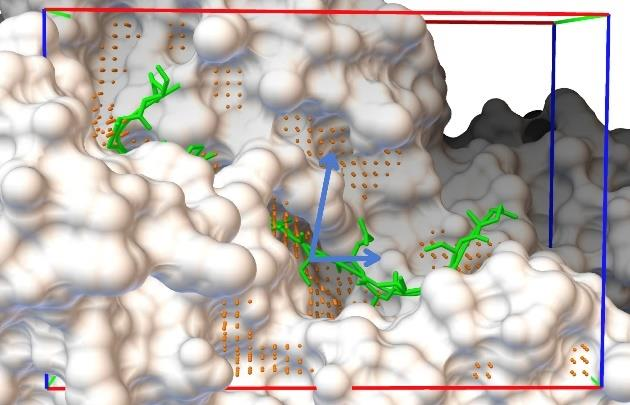
The AutoGridFR docking box defines where ADCP can place the peptide; orange points mark promising positions for the peptide root atom. Source: ADCP preprint (Zhang & Sanner, 2019), Fig. S1.
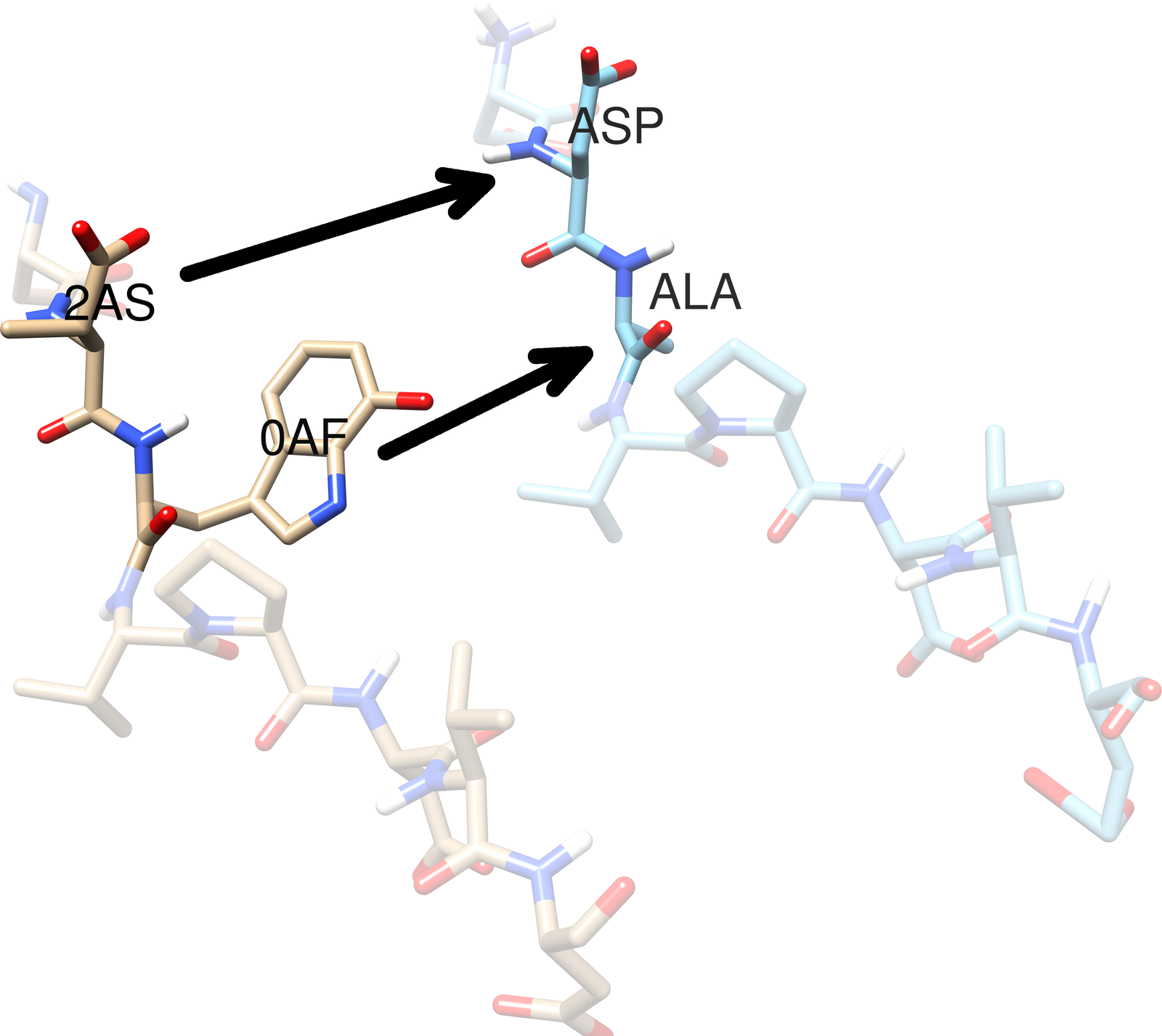
Non-standard residues (2AS, 0AF) in a peptide shown next to the standard residues (Asp, Ala) they correspond to, illustrating ADCP 1.1 support for non-canonical amino acids. Source: ADCP 1.1 website.
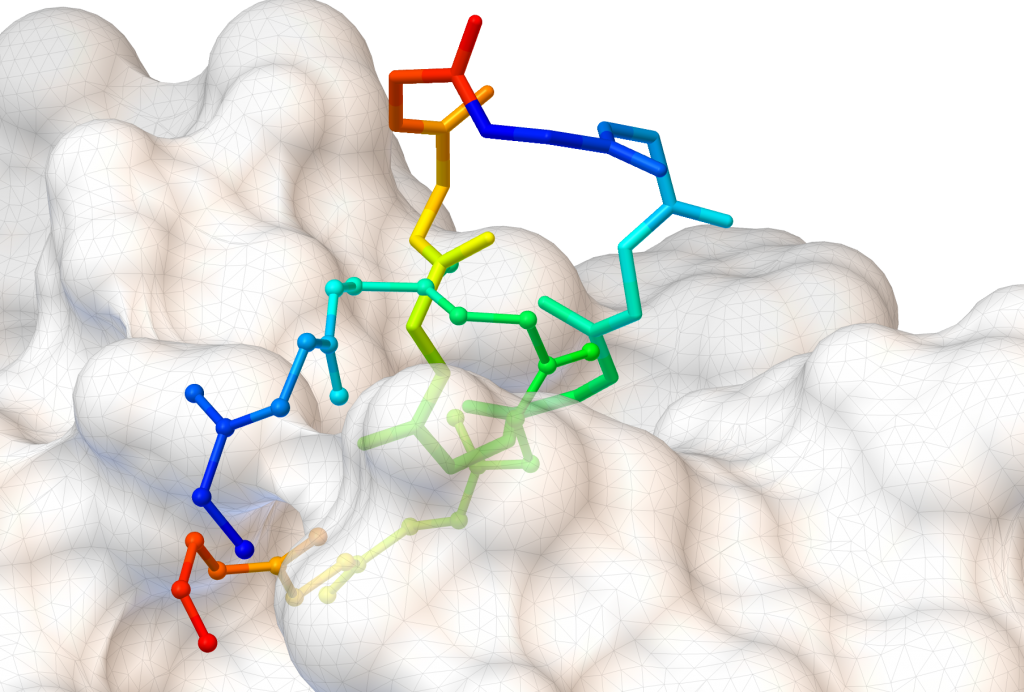
The cyclic peptide of PDB 3AV9 on the molecular surface of its receptor, colored from blue to red along the chain; a second view of the example shown on the ADCP overview page. Source: ADCP 1.1 website.